liteAPI 2025 Product Updates: Search Smarter, Price Better, Build Faster
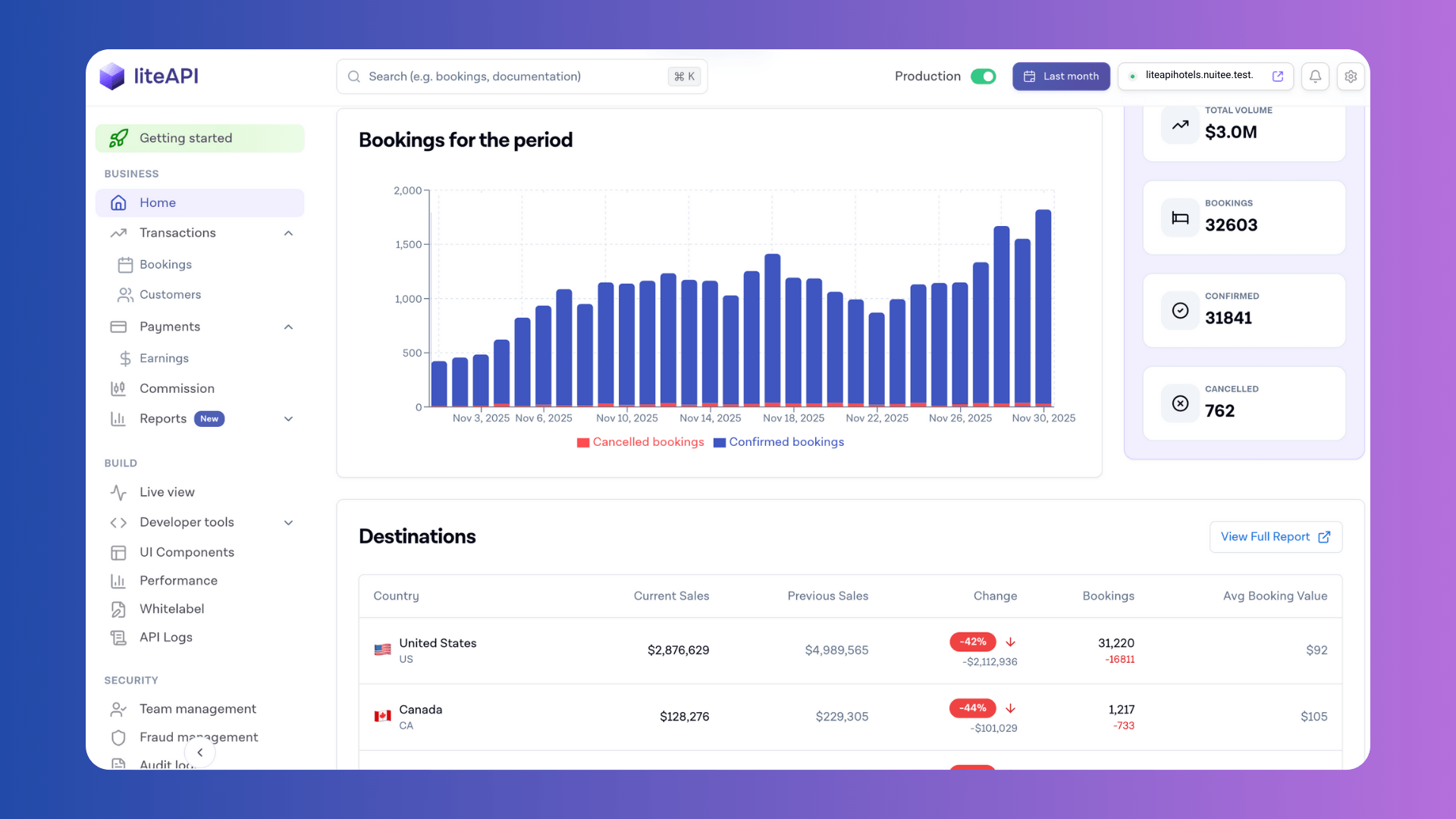
This year and especially over the past months, liteAPI and Nuitee’s Whitelabel platform have gone through a significant transformation.
By Nuitée
Published December 18, 2025
Inside the Latest Evolution of liteAPI & Nuitee’s Travel Infrastructure
What we have built recently isn’t a list of product features. It’s a shift in how travel infrastructure is designed and used, moving away from rigid filters, static pricing rules, and opaque systems, toward something more adaptive, expressive, and intelligent. We have released a dense set of product updates focused on three core areas:
Smarter discovery powered by AI and semantic understanding
Adaptive pricing and revenue optimization
Better developer, operational, and team workflows
This post walks through the most important product updates released in the last 1-2 months, with a closer look at how they work and what they enable for teams building on Nuitee today.
From Searching Where to Searching Why
For a long time, hotel search has looked the same everywhere: pick a city, add filters, scroll through results. AI has normalized natural-language, intent-based exploration, making traditional search models increasingly fragile when users don’t know exactly what they’re looking for.
One of the most impactful changes this year is the introduction of semantic, intent-based search across liteAPI.
With the new Semantic Search endpoint, applications can now search for hotels using natural language descriptions of experience, style, or persona, and not just attributes.
Instead of asking:
“Show me hotels in London with 4 stars”
You can now ask:
“A romantic boutique hotel in London with Italian vibes”
“A brutalist design hotel in Berlin with bold interiors”
“A family-friendly beachfront stay with spacious rooms”
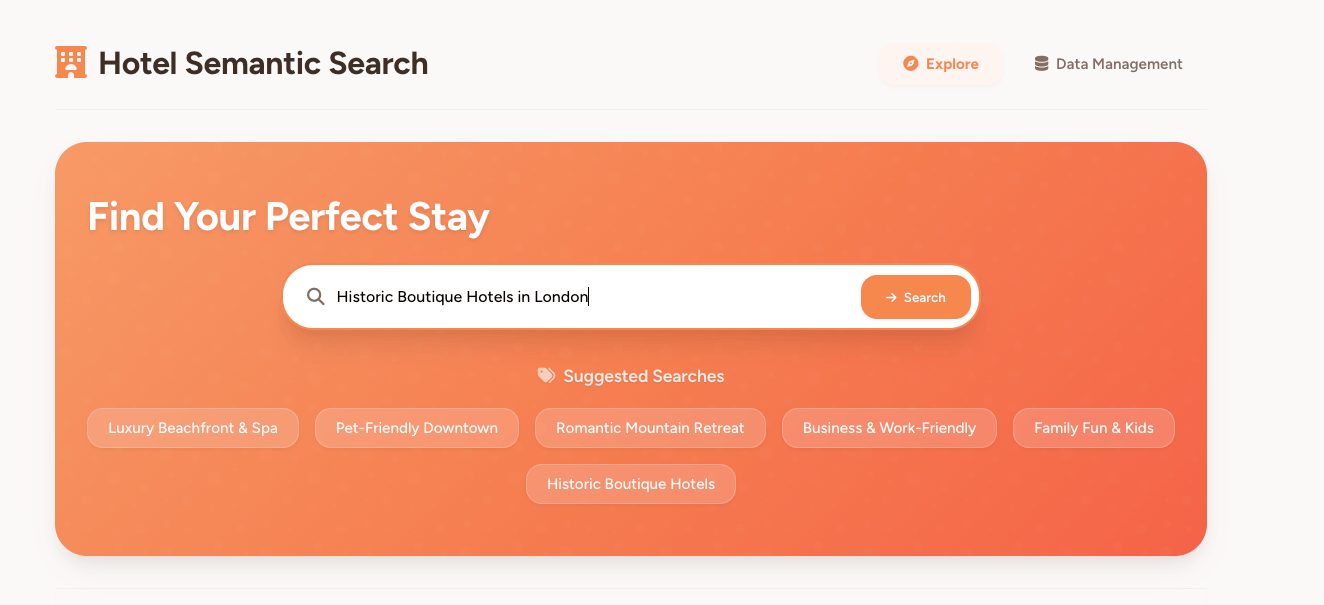
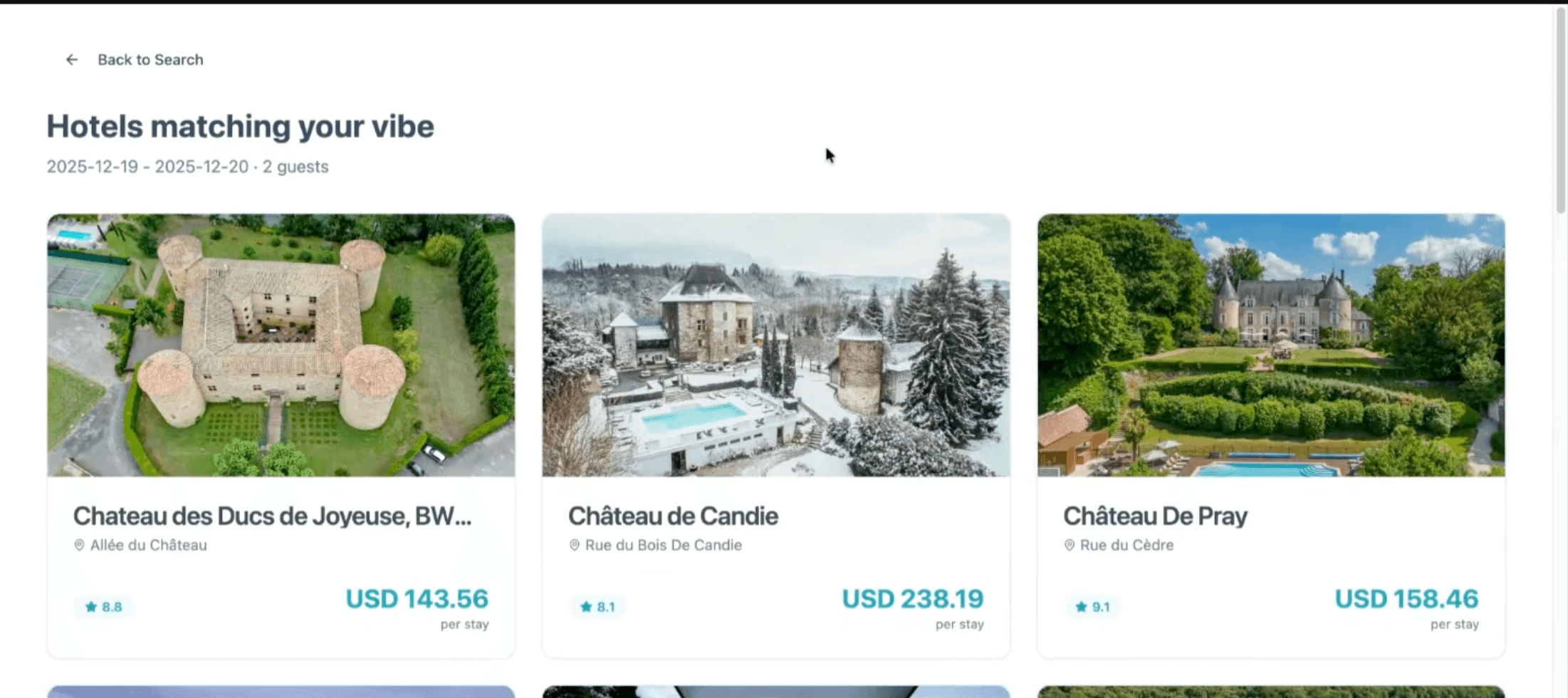
Behind the scenes, lliteAPI analyzes the semantic meaning of the query and returns hotels that match the intent, not just keywords. Results include contextual tags (style, persona) and clean hotel IDs that can immediately be used for availability and pricing.
The endpoint analyzes the semantic meaning of the query and returns:
A ranked list of hotels that match the intent
Contextual tags such as style and persona
Standard hotel identifiers that can be passed directly into availability and pricing workflows
This endpoint is designed to sit upstream of availability search, enabling inspiration-led discovery flows and AI-assisted trip planning experiences.
This unlocks a different kind of discovery:
inspiration-led browsing
AI trip planners
exploratory travel experiences that start with what the traveler wants to feel, not just where they already know to go
Turning Hotel Pages into Conversations
Discovery doesn’t stop at search results. Travelers often want reassurance, context, and answers before booking, and static hotel content rarely provides that.
The new “Ask Hotel” endpoint addresses this gap.
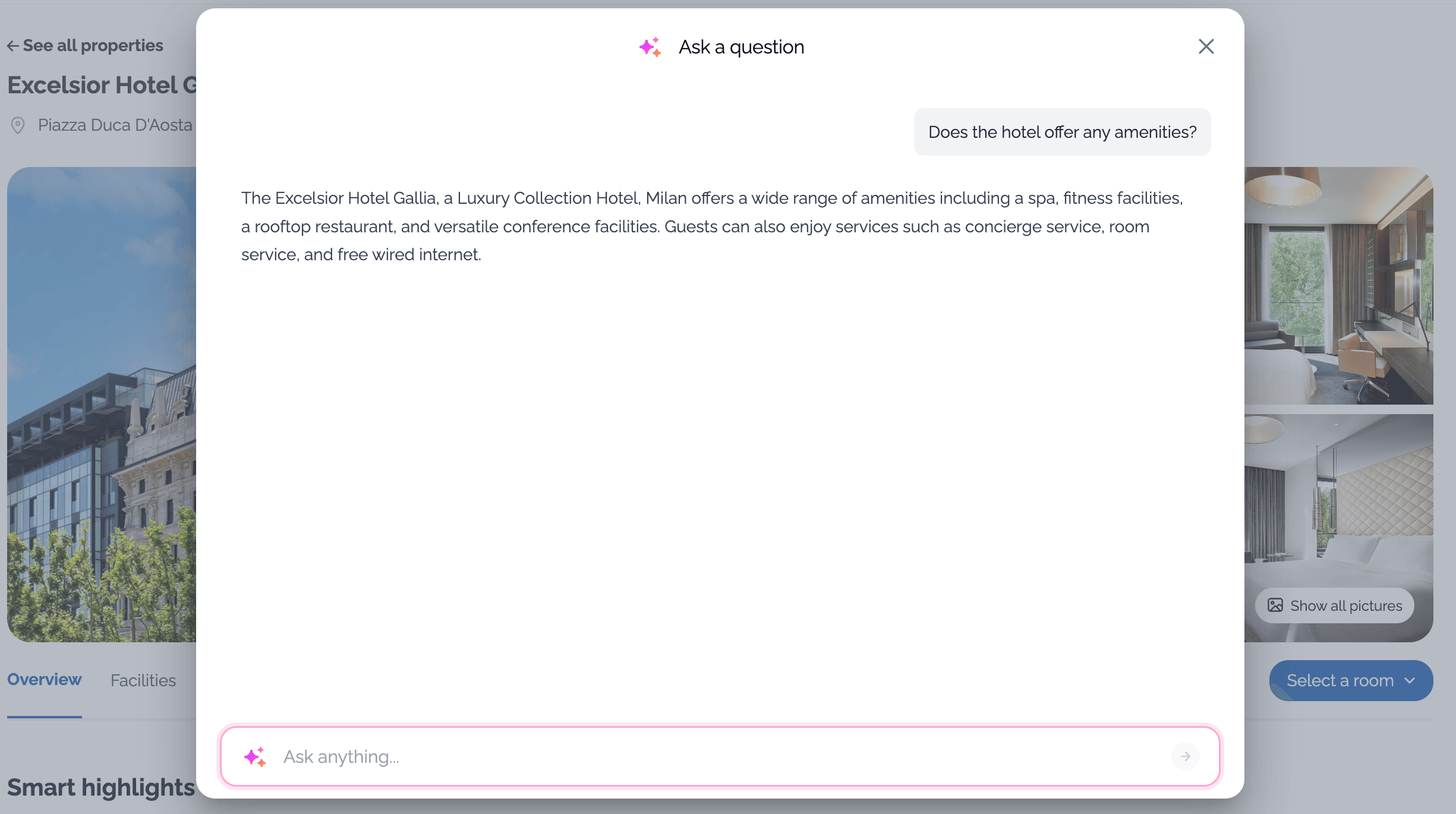
It allows applications to ask open-ended, conversational questions about a specific hotel, powered by Gemini reasoning and live Google Search.
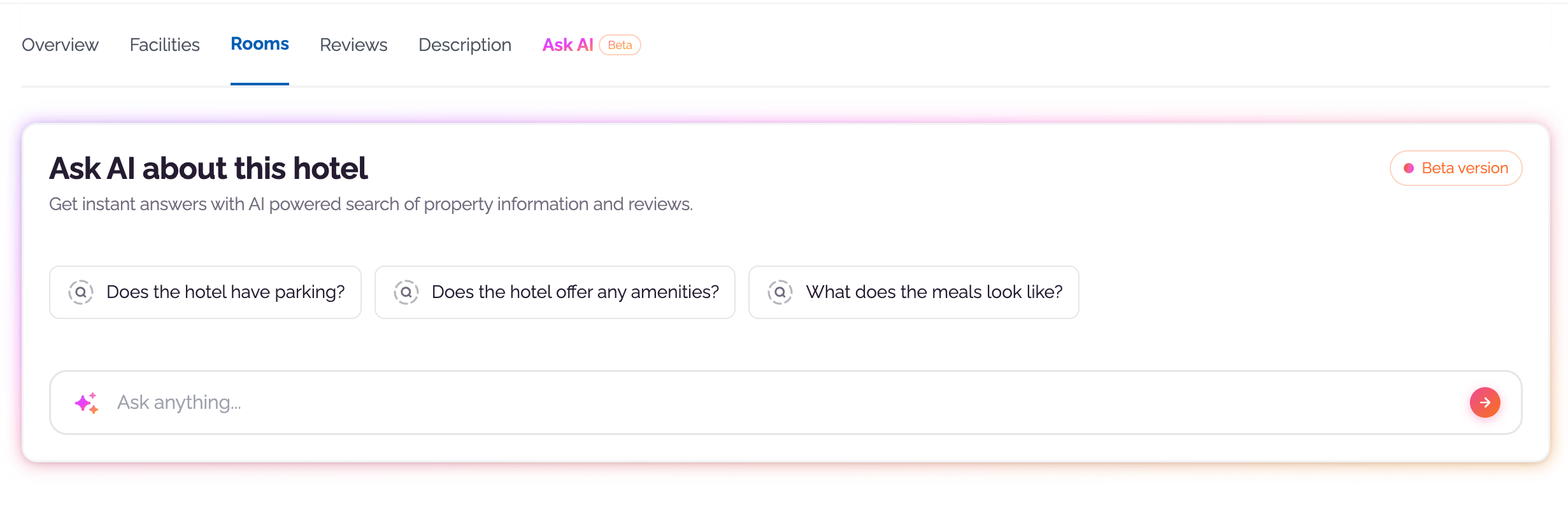
This allows applications to ask questions that go beyond static hotel content, such as:
“Is there a big event near this hotel this weekend?”
“Will it be quiet here in late December?”
“What kind of restaurants are nearby?”
Because the endpoint can access live web data, answers are not limited to preloaded amenities or descriptions.
Instead of sending users elsewhere to research, applications can now surface answers inside the booking flow. When integrated into a UI, this turns hotel pages into interactive, AI-assisted experiences rather than static listings.
Smarter Results, All the Way Down to Rates
AI-powered semantic understanding now extends beyond hotel discovery into room and rate search.
With improvements to the AI search in rates endpoints, developers can apply intent-based logic directly when retrieving prices. That means:
more relevant room options
fewer irrelevant results
simpler booking flows for teams that only care about what’s available right now
In some cases, teams can even skip intermediate steps, going directly from intent to bookable options without sacrificing relevance.
Image-Based Room Search: A Separate, More Granular Capability
In parallel, liteAPI also offers a dedicated room search endpoint that operates at a much deeper level:
This endpoint enables AI-powered search across the actual images of hotel rooms, allowing applications to query for highly specific visual and physical attributes, such as:
flooring type (carpet vs. hardwood)
bathroom style or color
room layout details
visual design characteristics
This capability is room-centric rather than rate-centric and works independently of rate search. It’s designed for use cases where the physical attributes of the room itself matter. For example, accessibility, design-driven stays, or highly specific traveler preferences.
Because it operates on room imagery and content, this image-based room search does not apply directly within rate search queries, and the two endpoints are intentionally kept separate.
Better Places, Better Localization
Alongside AI features, liteAPI’s Places search endpoints were substantially improved to support more precise and global discovery.
Updates include:
filtering by specific place types
better PlaceID resolution
cleaner alignment between place searches and hotel results
hotel content available in 30 languages
When searching by PlaceID, the matching hotel is now surfaced immediately at the top of results, reducing ambiguity and speeding up localized or map-based experiences.
Early Support for Vibe Coding
liteAPI now provides early support for Vibe Coding-style development.
With updated OpenAPI specs and a reusable AI wiring prompt, developers can:
Generate functional booking flows using AI coding tools
Prototype travel products in minutes
Bridge low-code tools and full custom development
This is an early step toward agentic development workflows that will continue to evolve in 2026.
Pricing That Adapts to the Market
Pricing is where many travel products struggle, especially at scale.
This is where Dynamic Markup, a new enterprise-level feature, changes the game.
Instead of relying on fixed margins, Dynamic Markup automatically adjusts pricing based on real-time market conditions. The system monitors competitor prices and adapts margins to:
stay competitive on tight inventory
increase earnings on deeply discounted rates
avoid losing bookings entirely when prices shift
Rather than choosing between “high margin” or “high conversion,” teams can now optimize for both without constant manual tuning.
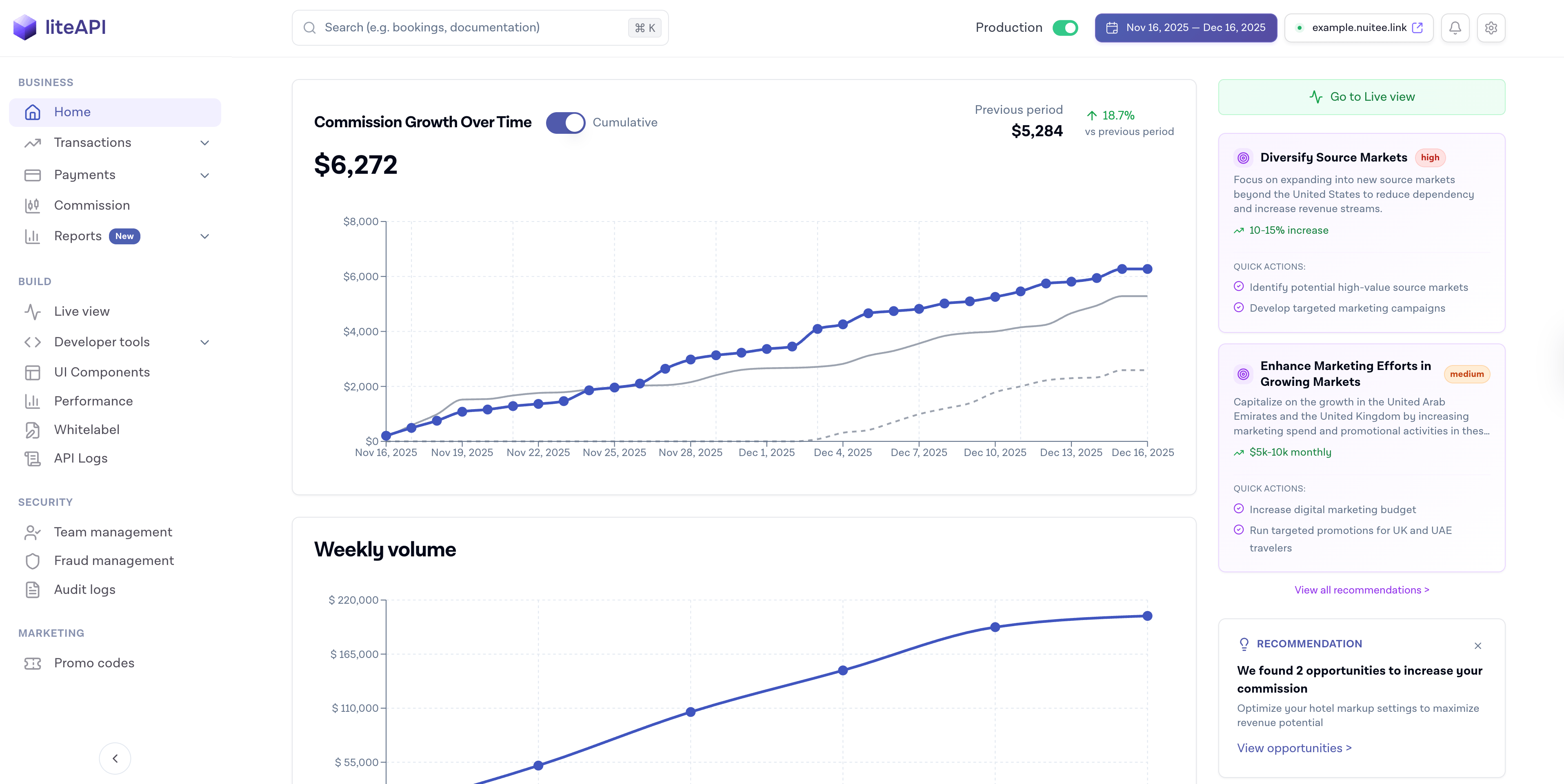
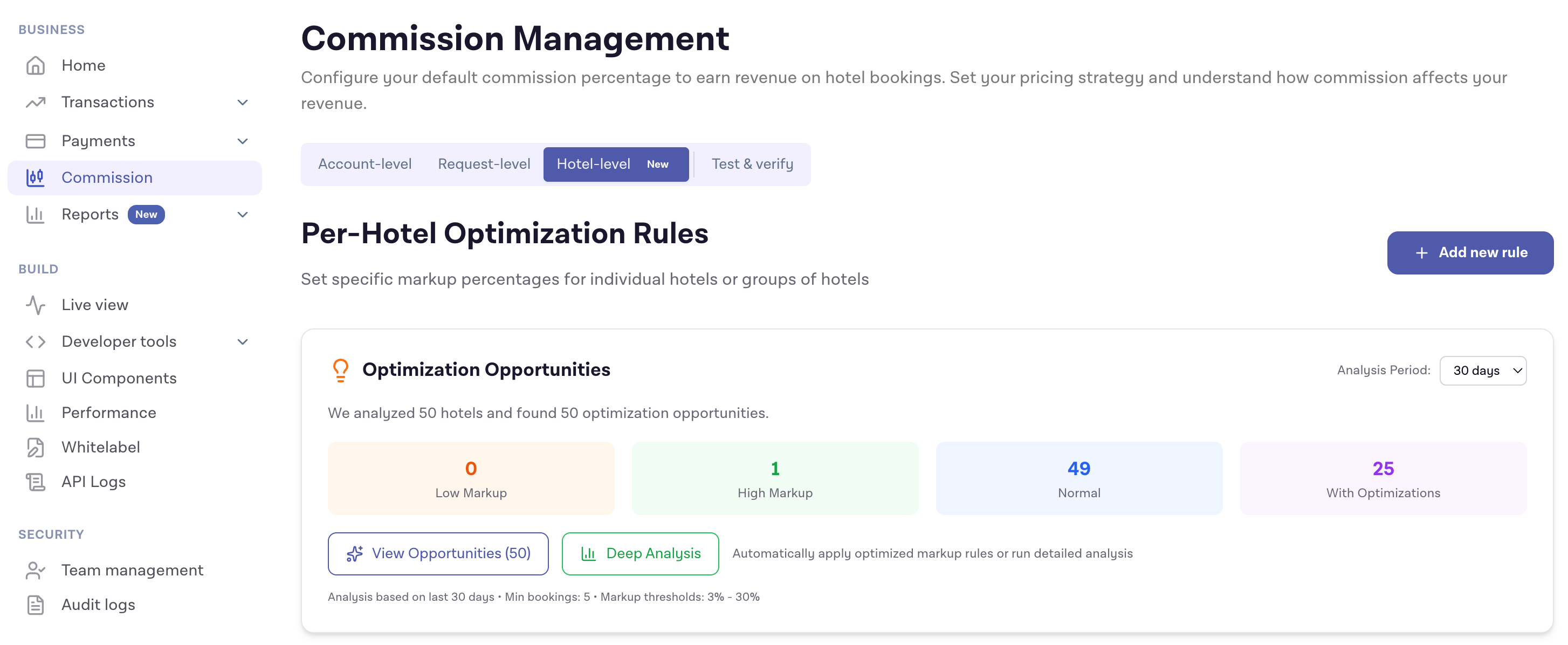
For customers who want more control, Markup Optimization Rules bring pricing into the dashboard in a clear, visual way.
Users can:
define custom markup rules per hotel or chain
see AI-highlighted opportunities where pricing changes could improve results
test scenarios directly and understand their real earnings per booking
Pricing stops being a backend configuration and becomes an active optimization workflow.
Visibility, Debugging, and Trust Built In
As liteAPI grows more powerful, transparency becomes essential.
That’s why several recent updates focus on making the platform observable and self-serve.
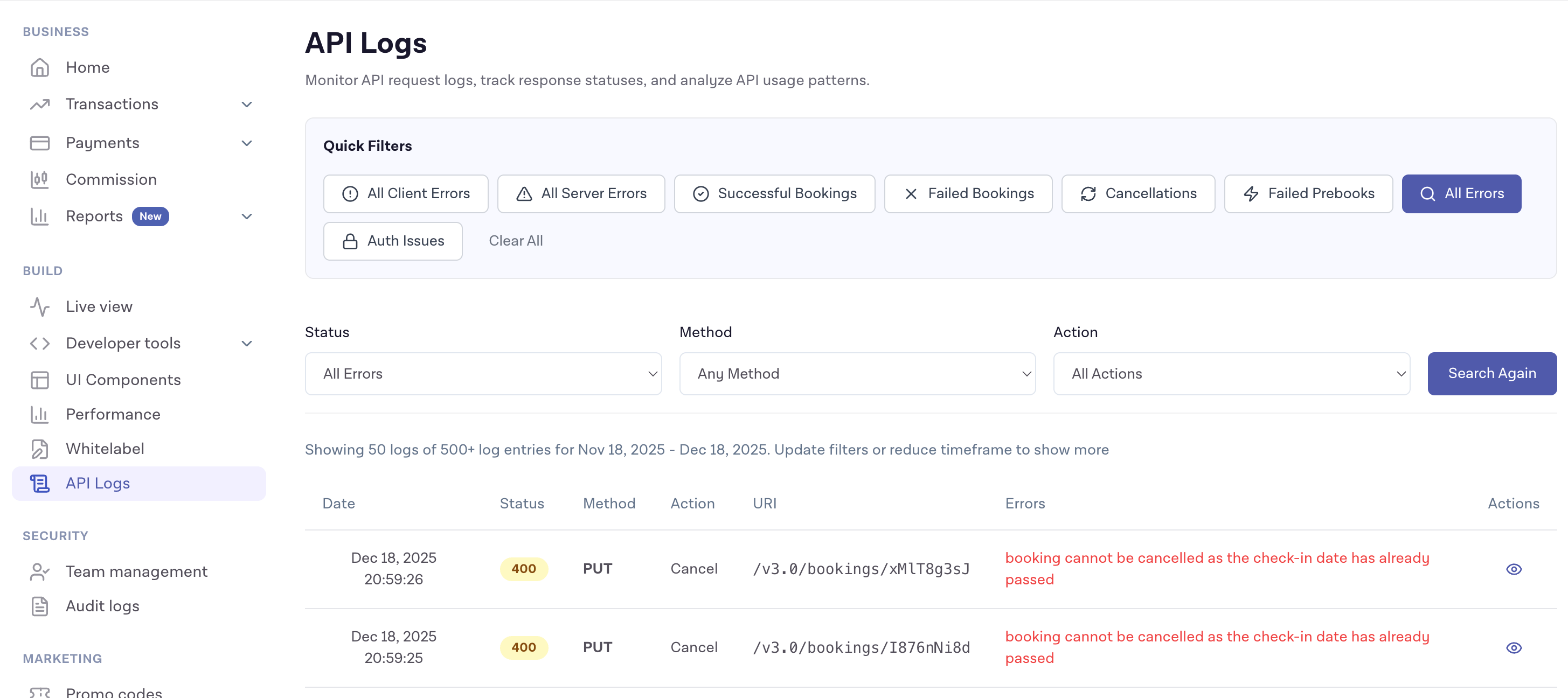
With API Logs, developers can now inspect requests and responses directly in the dashboard. Failed bookings, formatting issues, or availability problems are no longer guesswork, they’re visible, searchable, and easy to share with support.
Audit Logs add another layer of trust and control. They track configuration changes, user actions, and security-relevant events. An AI-powered scan analyzes this data to surface anomalies or risks, helping teams stay secure without manual monitoring.
Built for Teams, Not Just Developers
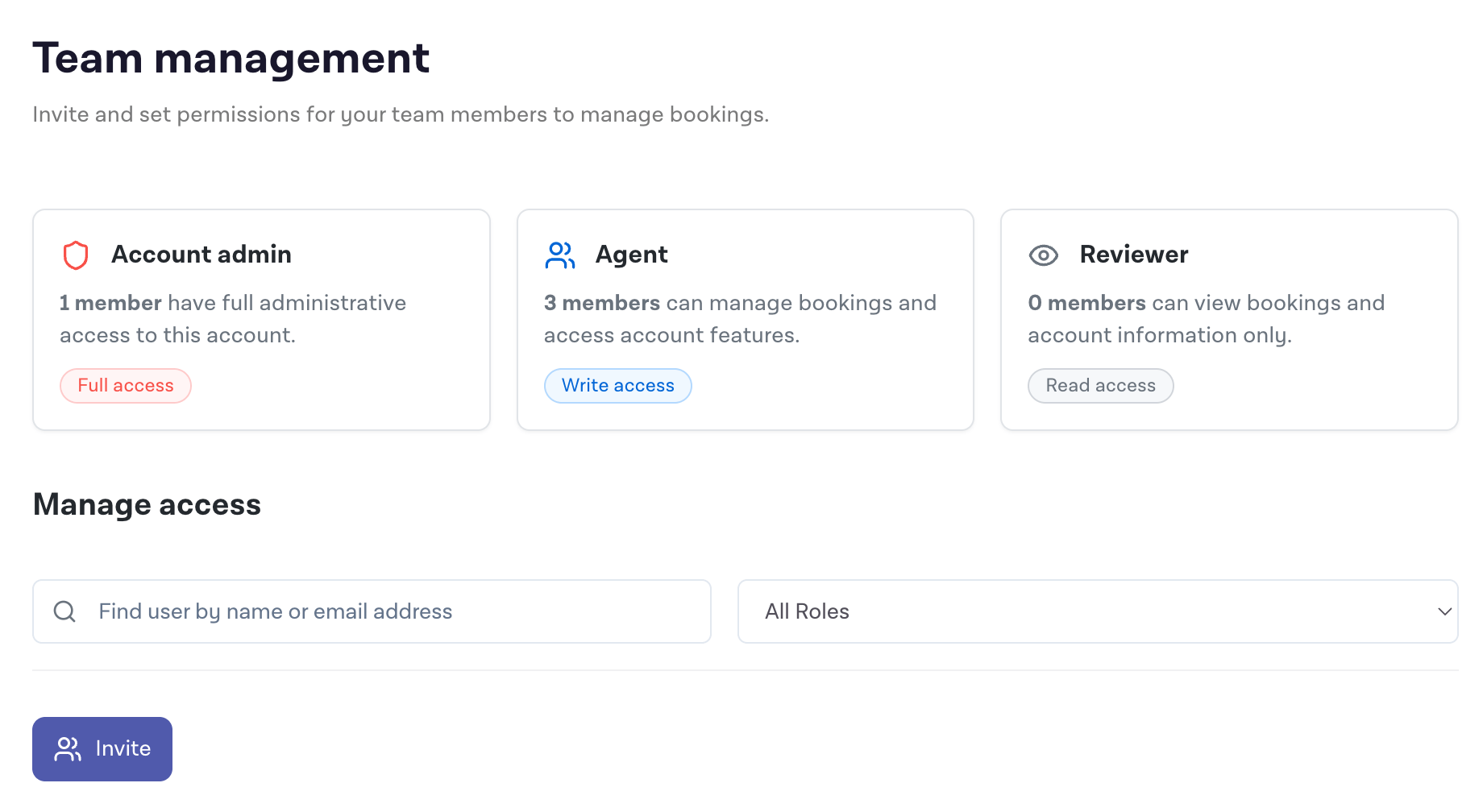
As customers scale, infrastructure needs to work for entire teams.
That’s why liteAPI now supports team management with user roles, including Admins, Agents, and Reviewers. Access can be shared safely, with clear ownership and permissions.
For customer support teams, the new Agents Dashboard introduces a major operational upgrade.
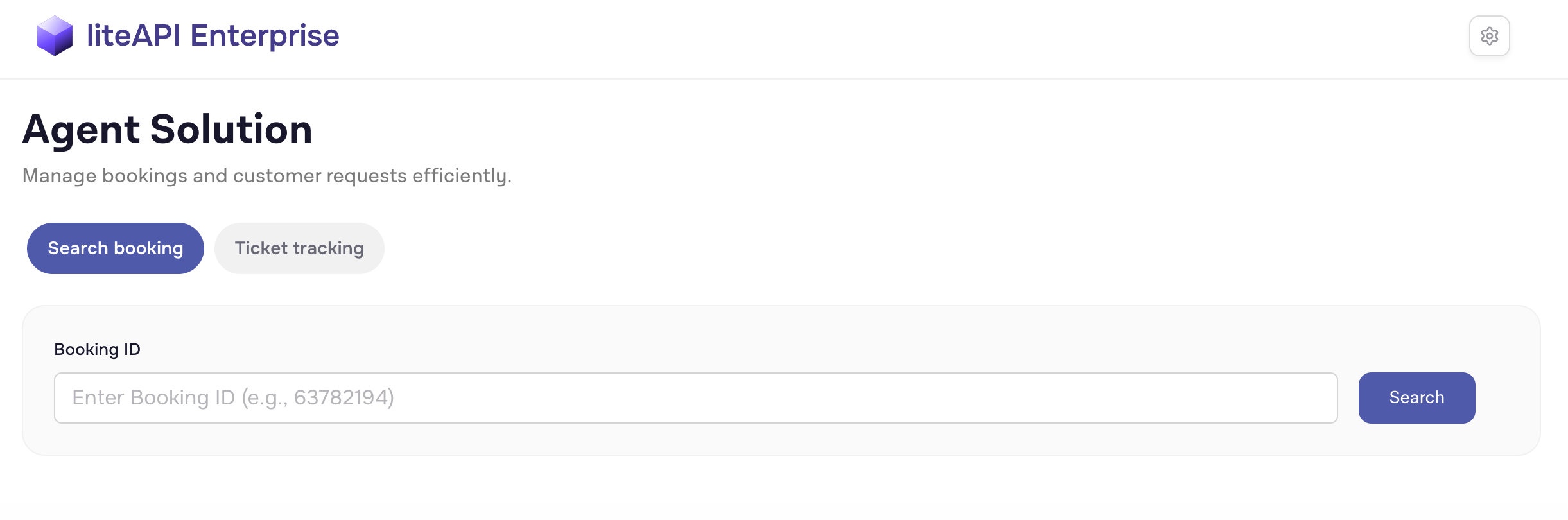
Agents can:
search and manage bookings
handle refundable changes directly
modify dates when inventory allows
apply changes that automatically reprice and charge correctly
generate support tickets with full history and context
What previously required manual coordination can now happen in a single, auditable flow.
A Faster, More Modern Whitelabel Experience
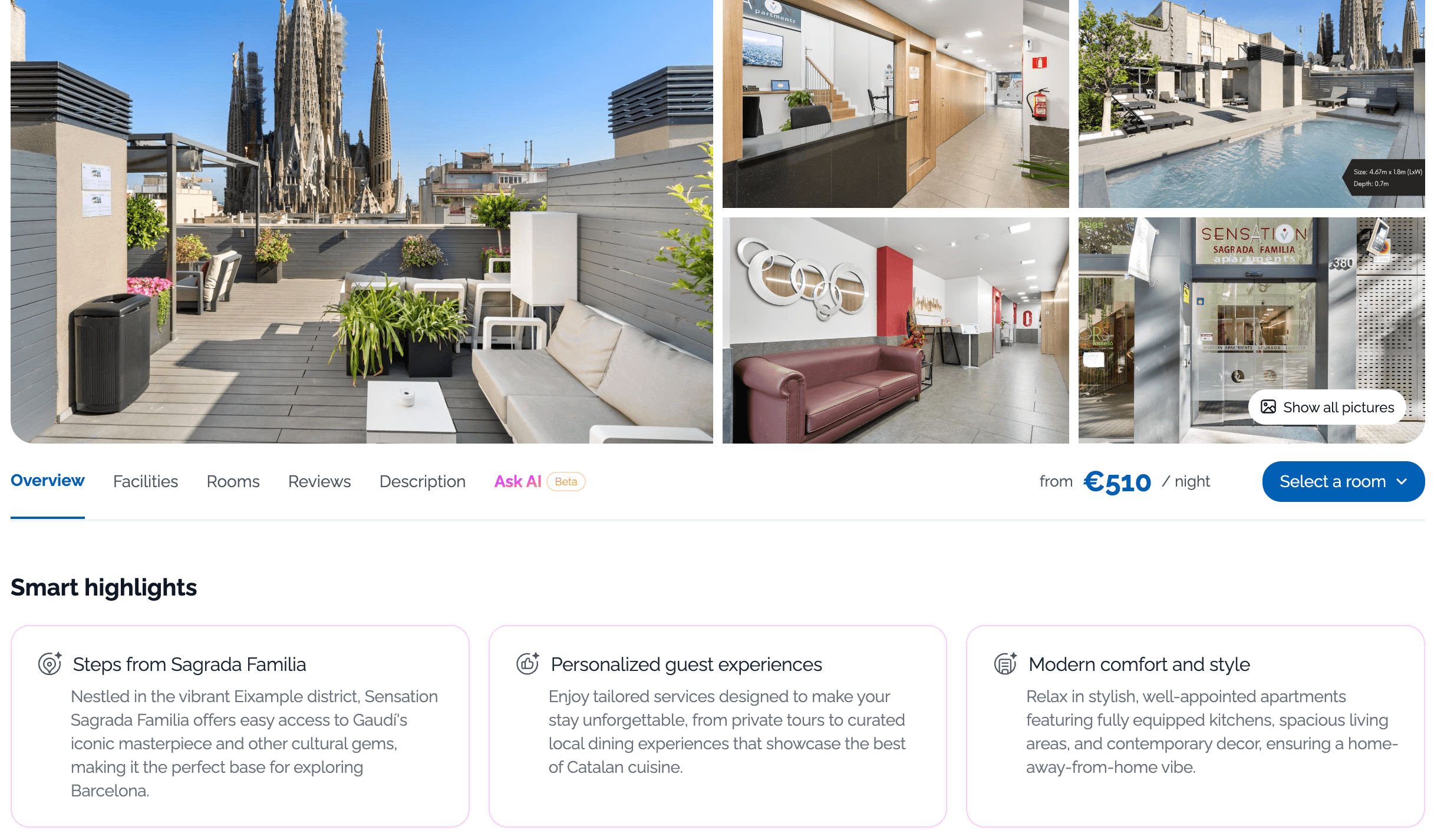
While liteAPI evolved under the hood, the Whitelabel platform received dozens of UX and UI improvements focused on exploration and conversion.
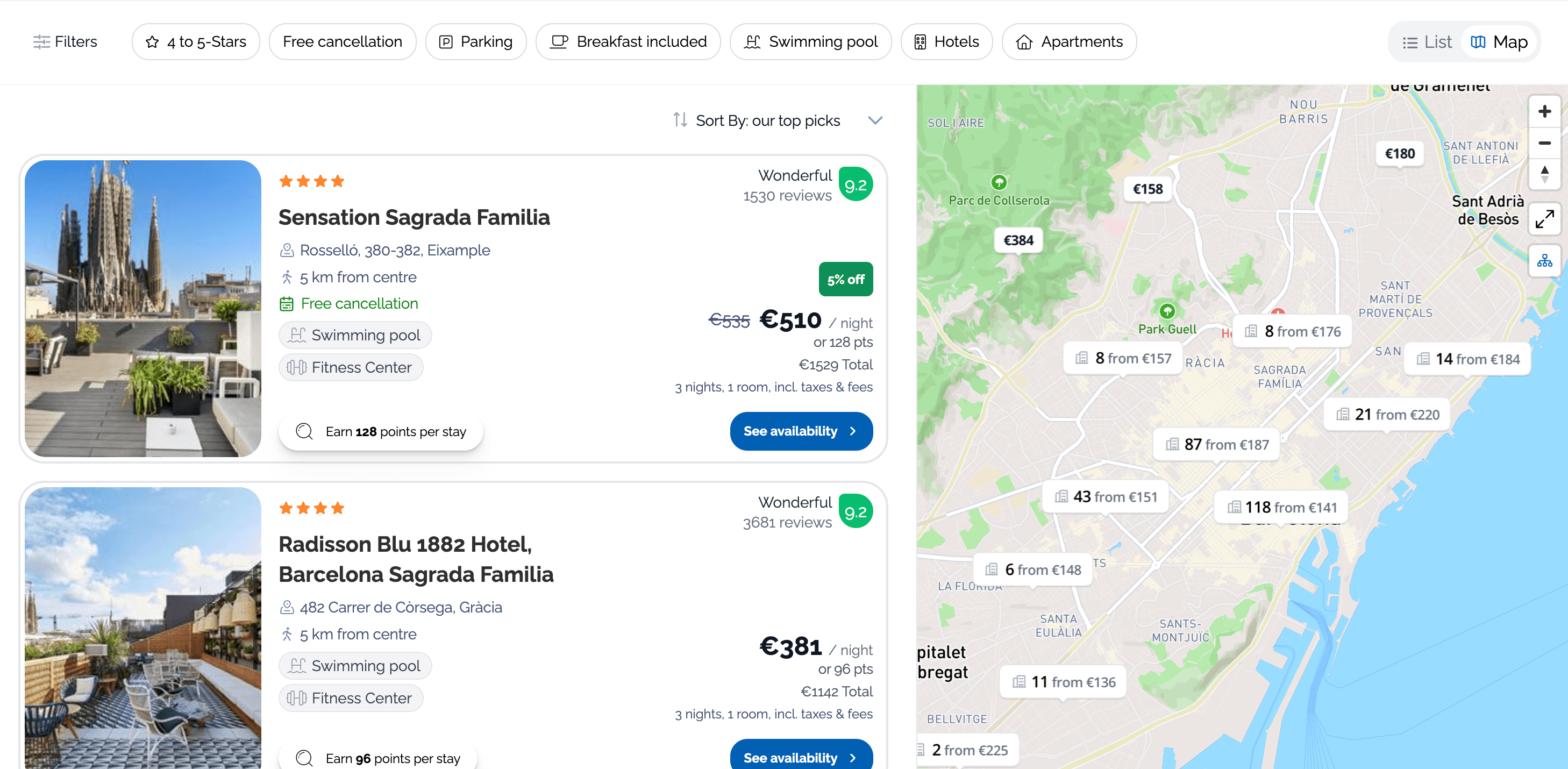
Recent enhancements include:
a map-first browsing experience with clustering for dense destinations
cleaner exploration without overwhelming users
smarter highlights on hotel detail pages
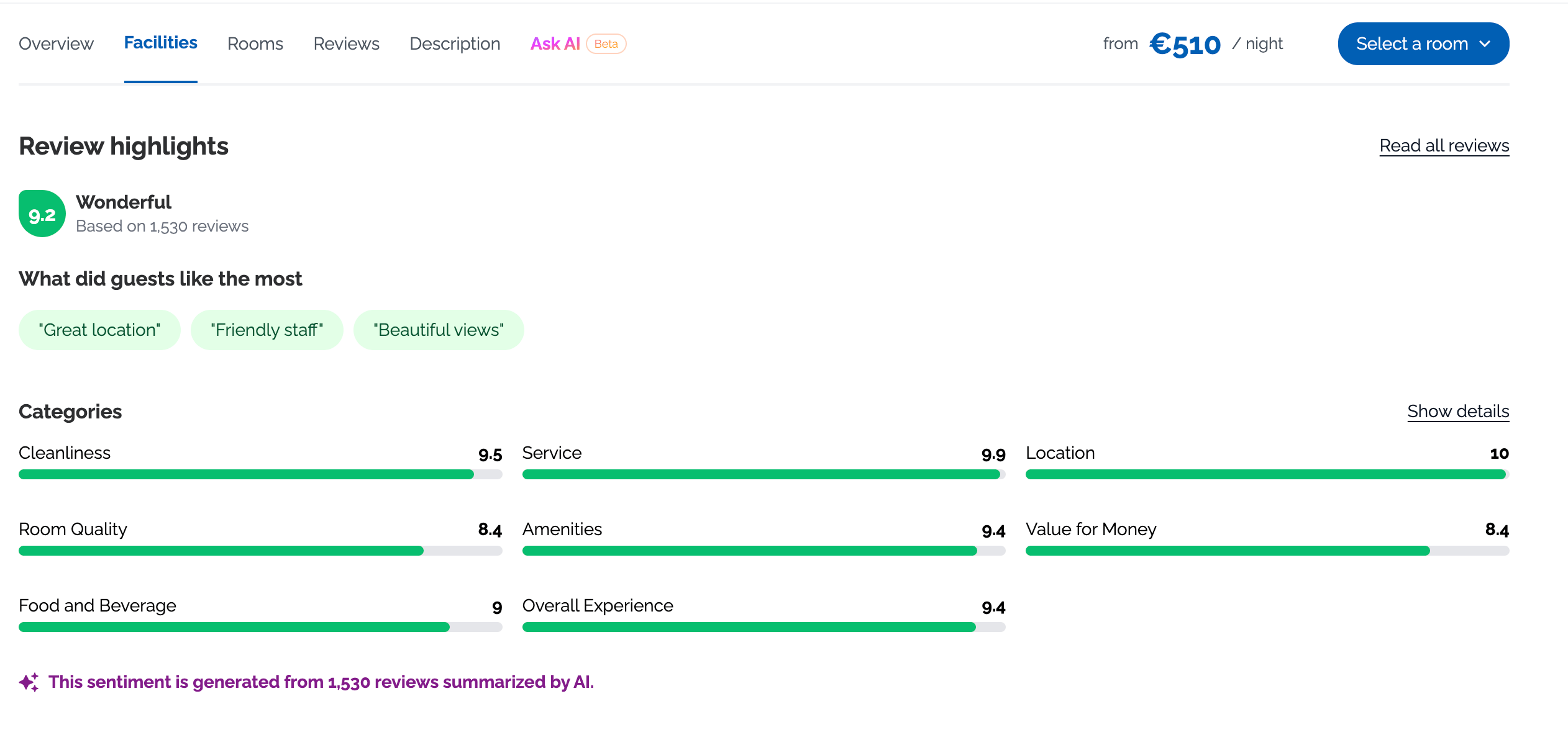
AI-powered sentiment summaries from reviews
improved supply curation controls
Every change released is based on continuous testing, only improvements that measurably improve usability or conversion make it to production.
Documentation Built for Humans and AI
Finally, the developer documentation was completely rebuilt.
Every endpoint now includes:
clear explanations of when and why to use it
practical workflows, not just references
structure designed to work with AI tools
downloadable OpenAPI specifications for automated integration
The goal is simple: make liteAPI easier to understand, easier to integrate, and easier to scale, whether you’re a developer, a product manager, or an AI agent wiring things together.
Looking Ahead
What we built in the last months is the foundation for what’s coming next.
Agentic workflows, deeper AI automation, richer analytics, loyalty integrations, and tighter supply orchestration are already in motion. The direction is clear: infrastructure that adapts in real time to intent, demand, and behavior.