Roamin: The App for Traveling Runners That Won the Google × Nuitée Hackathon
This is the real story of how two MBA students built an activity-travel product from scratch using Nuitée’s LiteAPI, Strava’s running data, and generative AI, all in under 72 hours. Here is our conversation with Roamin’s founders.
By Nuitée
Published December 04, 2025
Three days before pitching at Google’s London headquarters, Mike Tibollo and Nicholas Hruskoci were in a garage in Texas, laughing about how absurd it would be to skip class and fly across the world for a hackathon they had just discovered online.
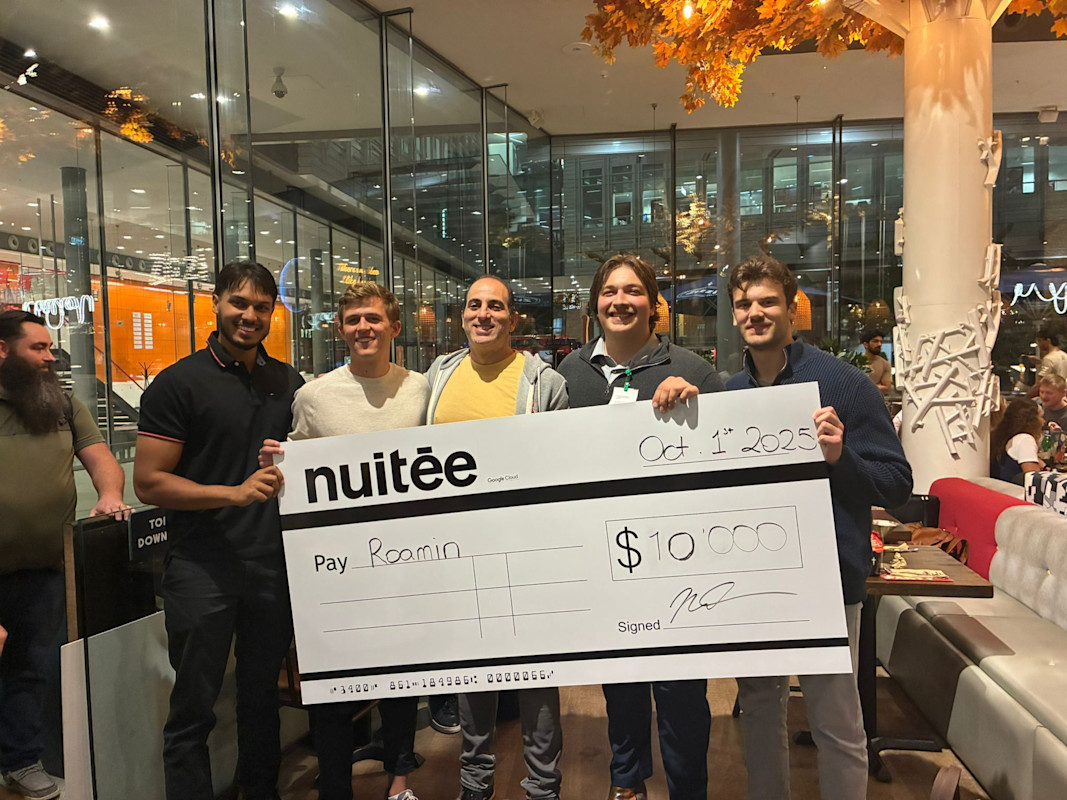
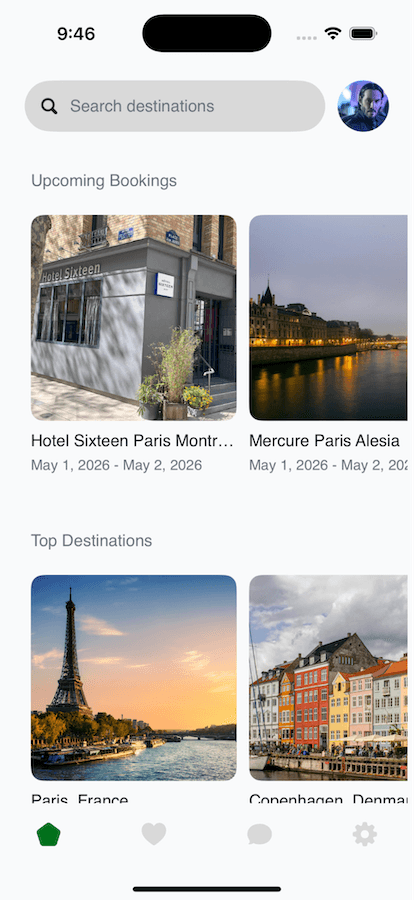
By Monday, they were standing in front of judges at the Google office, presenting a fully working app Roamin designed for runners who travel and want safe, accessible routes right outside their hotel. And they won first place.
This is the real story of how two MBA students built an activity-travel product from scratch using Nuitée’s LiteAPI, Strava’s running data, and generative AI, all in under 72 hours.
Below is our conversation with Roamin’s founders.
Question: Let’s start with your backgrounds. Who are you, and how did you get here?
Mike:
“My name is Mike. I’m originally from Canada. I studied business at McMaster University, and I’m now undertaking my MBA at Baylor University in Texas. I became a self-taught developer along the way. Last summer I interned at Yahoo working on their mail app, and I’ve been trying to expand my iOS skills, the hackathon felt like a great opportunity for that.”
Nick:
“I’m Nick, originally from the US. I did my undergrad at the University of Wisconsin-Madison, and now Mike and I are both doing our MBAs at Baylor. I’ve worked for an edtech startup, and I run another golf company. ”
Question: Take us to the moment you found this hackathon, what actually happened?
Nick:
“We had been trying to brainstorm business ideas all summer. We spent hours in this room throwing ideas back and forth, but nothing stuck. So we started looking for case competitions and hackathons just to get our creativity going.”
Mike:
“I was browsing Devpost for about an hour, filtering for current and upcoming events. I didn’t even see it at first, then suddenly the hackathon popped up. Hosted by Google. Only 20 or 30 people attending. And the deadline was in three days. And it was in London.”
Nick:
“We literally joked about it for hours. Like, there’s no way we’re actually booking a flight to London tomorrow. But the idea kept coming back.”
Question: What finally convinced you to go?
Nick:
“We attended the info session on Friday. We were texting each other the entire time because everything Nuitée was explaining made more and more sense — the challenge, the openness of the API, the direction.”
Mike:
“The combination of Google, the travel angle, and what Nuitee described felt like a real opportunity. By the end of that day we pulled the trigger.”
Question: Before this, had you ever considered building something in travel tech?
Mike:
“No. It only became a possibility after the info session.”
Nick:
“We always assumed the travel part such as hotel data, rates, booking, would be incredibly complicated. LiteAPI really shifted that. It made travel actually doable for two people who aren’t from the industry.”
Question: How did the idea for Roamin emerge once you decided to participate?
Nick:
“I was a collegiate runner for ten years. I run every single day. And when you travel, running becomes stressful, and you don’t know if routes are good, safe, or even enjoyable. I’ve had so many bad runs in new cities.”
Mike:
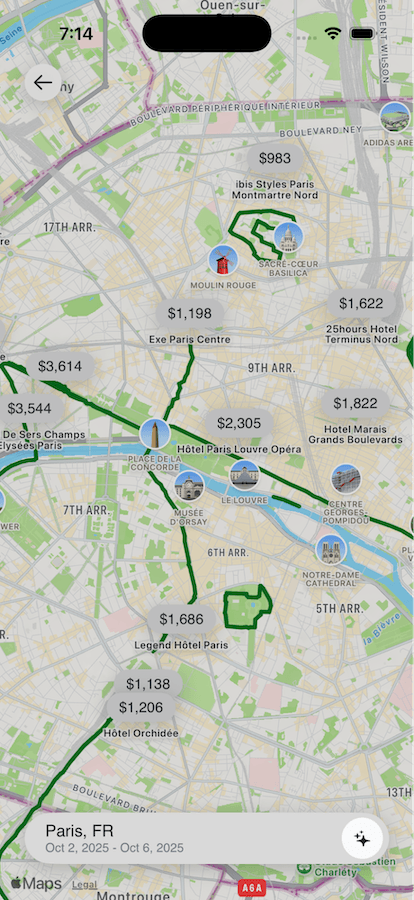
“All the current platforms are fragmented. You book a hotel in one place, search for routes somewhere else, and none of them tell you if an area is actually suitable for running. Everything is scattered. Roamin solves that by combining hotel booking and running-route discovery into one platform.”
Question: What was the actual experience of building this app in 72 hours?
Nick:
“I’m not technical, so I focused on the business model. But I really cared about having real running routes in the app. Getting quality routes was a big deal and a headache. We scraped some Strava routes just to make the demo acceptable, but we want a lot more.”
Mike:
“It wasn’t easy. You’re building something technically complex in three days, something that hasn’t really been done before. But LiteAPI made the travel part simple. That was important because it freed up time for us to focus on the running-route side.”
Question: From the development side which LiteAPI features did you use?
Mike:
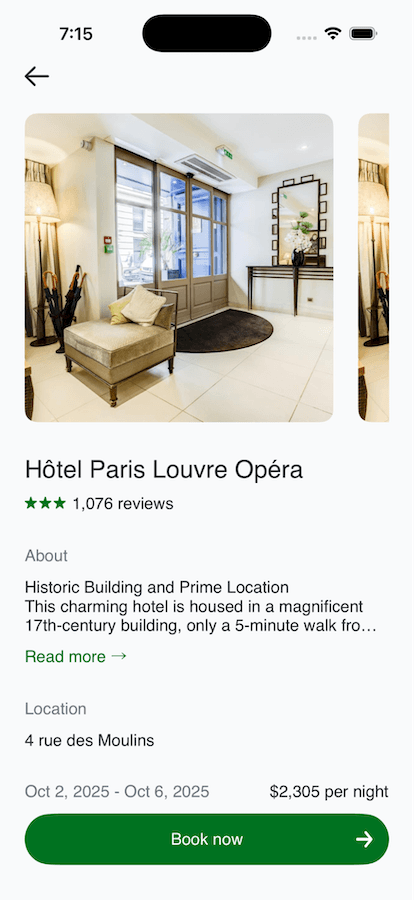
“We used the full standard flow: searching hotels in a geographic area, fetching rates, getting hotel details, and running the booking flow with credit card input. I thought I was doing something wrong at first because I had to make multiple calls but that’s how it’s designed. And you don’t charge for those calls, which is huge.”
Question: How would you describe LiteAPI to another developer?
Mike:
“Plug-and-play is the perfect definition.”
Nick:
“We genuinely didn’t think building in travel was possible. And LiteAPI made it possible.”
Question: What does the future of Roamin look like, from your roadmap, to who you're building for, to where you hope this grows?
Mike:
“Our roadmap right now is to have Version 1 ready by January 2026. We need to finish our route determination model, polish the app from the state it was in during the hackathon, and start bringing it into the running community. Run clubs and running stores are integral to that world, so getting them involved is really important.”
Nick:
“We’re planning to start in the US because that’s the running culture we understand best, but we definitely want to go global as soon as we can. And even though it’s technically a side project while we’re in school, it takes up about 99.9% of what we think about. We’ve been working on it every day. So yes, we’re very focused and excited.”
Mike:
“In the long term, our vision goes way beyond running. Running is where we both come from, but our dream is to become the Expedia or Airbnb for wellness and activity travel. There’s a huge shift happening in how people travel and younger travellers want movement, community, and experiences. So we see Roamin expanding into cycling, hiking, skiing, snowboarding… activity-based travel in general.”
Question: And finally, after working with LiteAPI during the hackathon, what stood out to you the most?
Mike:
“For an industry we didn’t understand at all, LiteAPI was surprisingly easy to pick up. The flow was simple, the structure was clear, and everything worked exactly the way we needed it to. For something as complex as travel, being able to understand and integrate an API like that in three days was genuinely amazing. It made the entire project possible for us.”
Final Note
Roamin is a perfect example of what happens when talented builders have access to tools that eliminate complexity.
With LiteAPI, Mike and Nick didn’t need partnerships, travel industry expertise, or months of development. They just needed a clear idea, three days of work, and an API designed to let anyone integrate travel instantly.