Launching a Travel Product Is a Distribution Problem, Not a Development One
Most companies that want to add travel to their product roadmap make the same mistake early: they frame it as an engineering problem. How long will it take to build? What APIs do we need to integrate? Who owns the backend? The questions are reasonable, but the framing isn't, because the actual barrier to launching a travel product isn't technical complexity. It's the assumption that building is the only path. It isn't.
By Nuitée
Published March 17, 2026
Launching a Travel Product Is a Distribution Problem, Not a Development One
Most companies that want to add travel to their product roadmap make the same mistake early: they frame it as an engineering problem. How long will it take to build? What APIs do we need to integrate? Who owns the backend? The questions are reasonable, but the framing isn't, because the actual barrier to launching a travel product isn't technical complexity. It's the assumption that building is the only path.
It isn't.
The Build Reflex
There's a recognizable pattern in how non-travel companies approach adding hotel booking to their product. A loyalty program wants to let members redeem points for stays, an airline wants ancillary revenue beyond the flight, a fintech brand wants to offer travel as a perk, and a media company wants to monetize the intent it's already generating. In each case, the initial instinct is identical: scope a development project, design the UI, find a supplier, negotiate contracts, build the checkout, handle payments, manage customer service flows, and plan a launch somewhere in the six-to-twelve-month window.
That sequence sounds reasonable, and it also explains why most of these projects either stall entirely or ship late with a fraction of the original feature set.
The problem isn't engineering capability. It's a category error. What looks like a development project is actually a distribution strategy, and distribution strategies aren't won by the teams that build the most infrastructure. They're won by the teams that reach their audience fastest, with the least friction between intent and action.
What You Actually Need to Own
Before committing to a travel build, there's a useful question worth pressure-testing: what part of this product creates competitive advantage, and what part is just infrastructure?
For an airline adding hotel booking, the advantage is the existing passenger relationship and the ability to bundle the offer around the flight. The checkout flow, room mapping, payment processing, and rate optimization aren't where the airline wins; those are infrastructure costs that don't differentiate the product for a single customer. For a loyalty program, the advantage is the member base and redemption mechanics. For a fintech app, it's the trust embedded in the financial relationship. For a media brand, it's the editorial voice and the audience that came with it.
In almost every case, the competitive advantage lives in the brand and the audience, while the booking infrastructure is a commodity layer that someone else has already built, maintained, and refined at scale. Owning that layer doesn't create an advantage; it creates a maintenance burden.
The Whitelabel Argument
A whitelabel travel platform separates two things that have historically been bundled together: the booking infrastructure and the brand experience. The infrastructure layer handles everything underneath, including inventory, pricing, availability, payments, and customer support, while the brand layer stays entirely with the company launching the product: the name, the visual identity, the positioning, and the audience relationship.
The practical result is a branded booking website that a company can launch in days rather than months, without dedicating a development team to travel infrastructure and without negotiating supplier contracts or managing payment rails. That's not a shortcut. It's a reallocation of where effort actually goes, with the time that would have gone into building a booking engine redirected toward building the customer experience on top of it.
Who This Model Works For
The range of companies that benefit from this approach is wider than it first appears, and the more interesting examples tend to come from outside the traditional travel category.
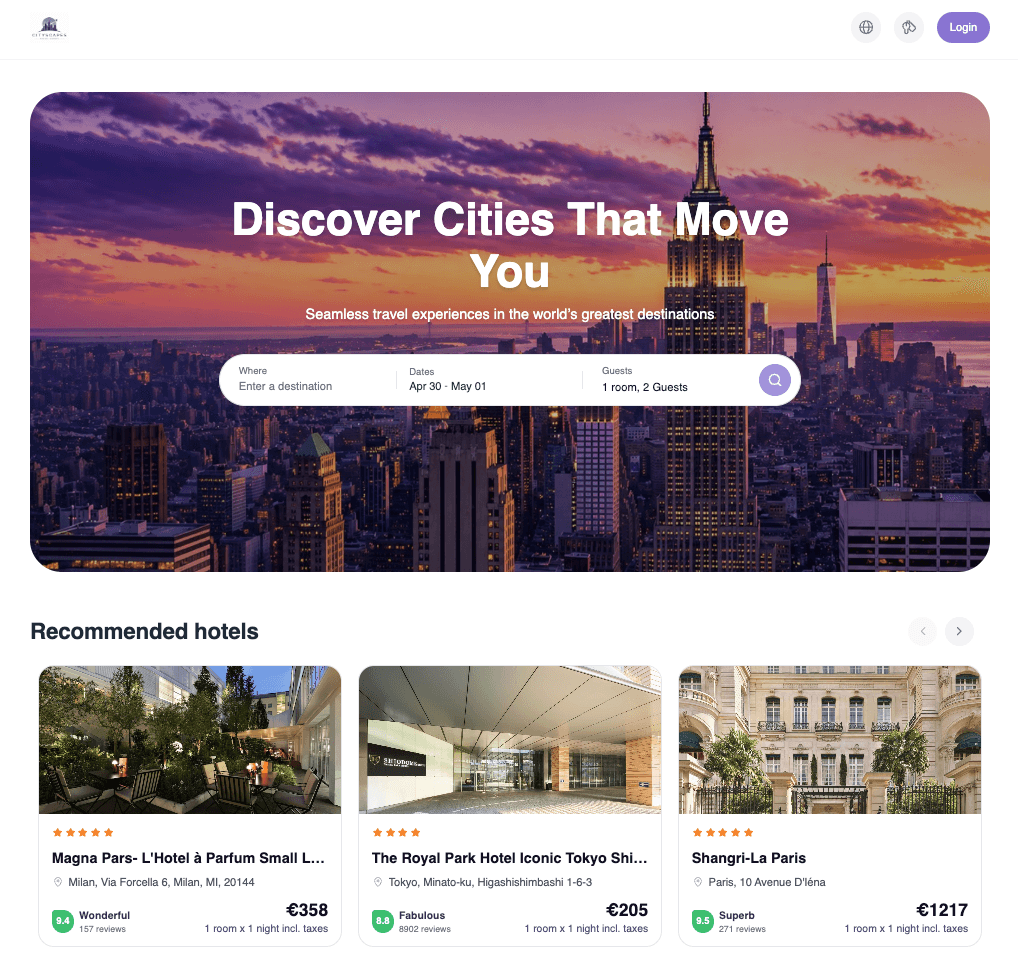
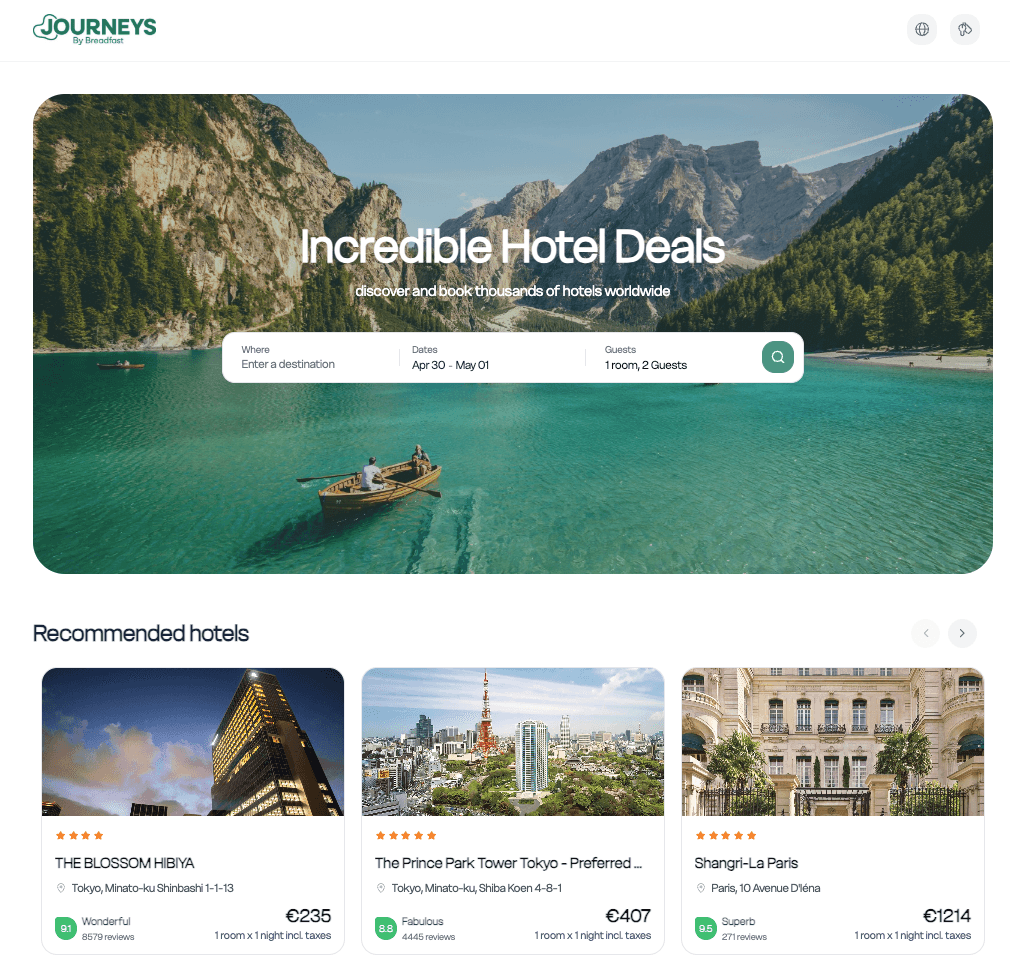
Journeys by Breadfast is a useful case in point. Breadfast built its reputation as a delivery platform, not a travel company, but it had something valuable: a large, loyal base of users who trusted the brand for their daily needs. Extending that trust into accommodation deals wasn't a leap of logic; it was a natural expansion of an existing relationship. Launching a hotel booking product under the Breadfast brand through a whitelabel platform let them move fast, without rebuilding that trust from scratch in a new category.
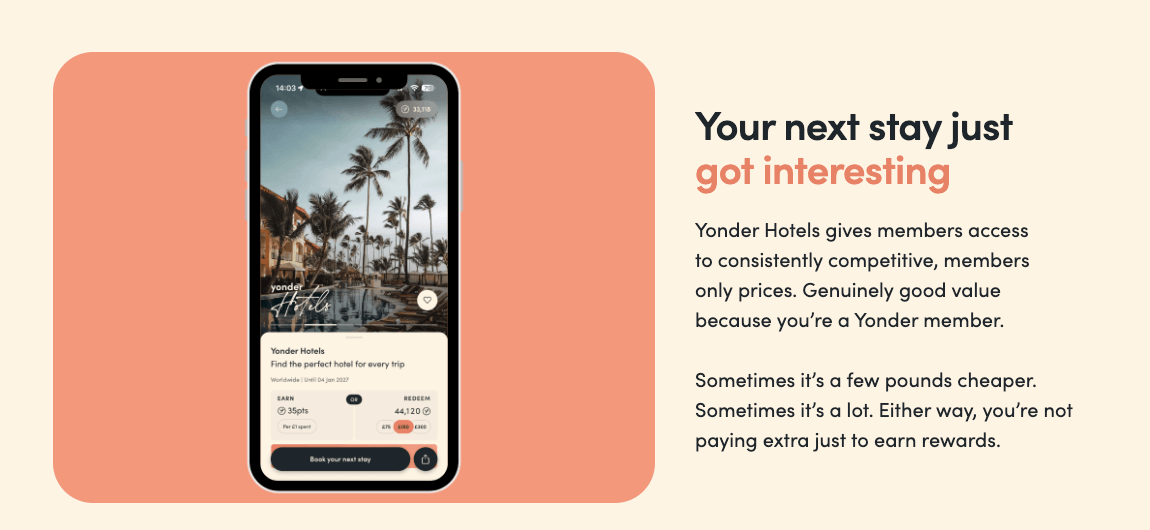
Yonder, a lifestyle fintech, followed a similar logic. For a card product built around rewarding members for how they live, adding curated hotel stays isn't a stretch; it's a direct extension of the value proposition. Rather than building a booking engine from the ground up, Yonder used a whitelabel platform to give cardholders access to stays as part of the membership experience, adding a meaningful perk without meaningful development overhead.
The common thread across both isn't travel expertise. It's the situation: a clear audience, a clear reason to offer accommodation, and a preference for reaching that audience quickly over owning every layer of the stack that makes it possible. For companies in that position, the question isn't "can we build this?" It's "how fast can we be in front of our users?"
Fast Is a Strategy
Speed to market in travel matters more than it once did, for a specific reason: the competitive dynamic has shifted. For years, launching a travel product was hard enough that incumbents had structural protection, and the friction of building was itself a moat. That friction has dropped considerably, meaning more companies can now enter the category, and the advantage goes to the ones who launch first and iterate fastest rather than those who ship the most complete version before going live.
A whitelabel approach compresses the timeline from concept to live product to something measured in days, not quarters. Instead of spending months building toward a launch, a company can be live in weeks, learning from real user behavior and adjusting pricing, positioning, and inventory based on what actually converts. The feedback loop is the advantage, and you can't get it from a product that hasn't shipped.
This Isn't Just a Starter Kit
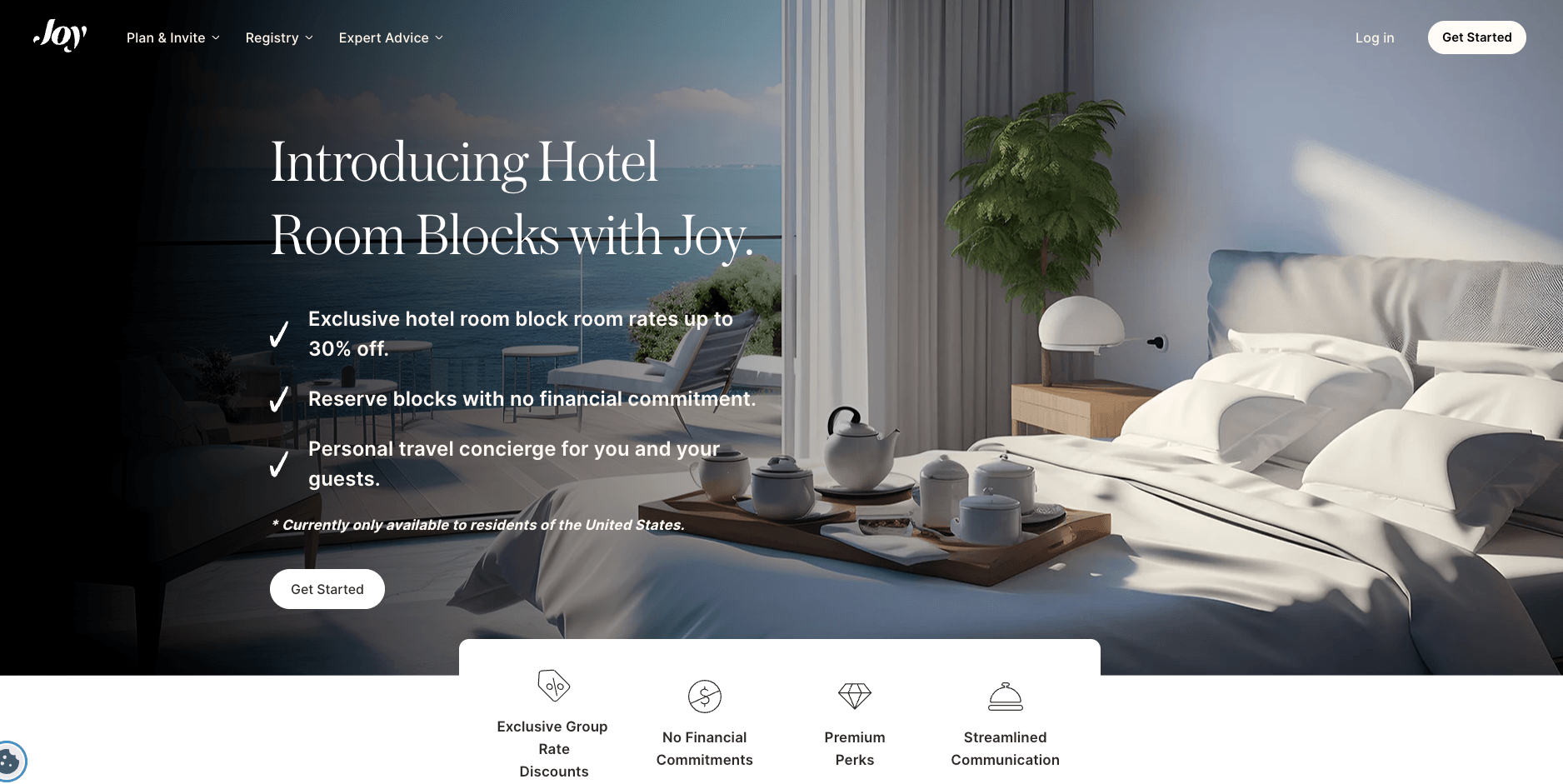
One assumption worth addressing directly is that whitelabel solutions are a starter kit, something to use temporarily and outgrow once the product proves itself. The experience of Joy, a wedding planning app, is a useful counter to that argument.
Joy launched its hotel booking product on a whitelabel platform to move quickly and validate that its users would actually engage with accommodation as part of wedding travel planning. They did. Once the product had proven itself and the team had a clear picture of what their users wanted, Joy built out their own custom UI and UX on top of the underlying infrastructure. The whitelabel wasn't a limitation they escaped; it was the foundation that let them learn before they invested.
That pattern matters because it reframes the decision. A full-stack whitelabel travel product includes AI-powered dynamic pricing, smart recommendation logic, SEO-optimized pages, marketing and retention tools, and real-time performance dashboards, with inventory coverage running to millions of properties globally and pricing that adjusts dynamically rather than statically. Additional capabilities including loyalty integrations, advanced packaging, and agentic booking flows are available as the product matures and the business scales into them.
The build-versus-buy question in travel isn't about maturity; it's about where the company's value actually sits, and for most companies entering the category, it doesn't sit in the booking infrastructure.
The Margin Dimension
There's a commercial argument that doesn't get made clearly enough: ancillary revenue from hotel bookings carries unusually favorable margin characteristics when the infrastructure cost is fixed and shared. A loyalty platform or a brand like Breadfast that drives hotel bookings through its own storefront earns margin on inventory it didn't source, through a checkout it didn't build, with customer service it doesn't staff, keeping the incremental cost per booking low while the incremental revenue is real.
Compare that against the full economics of a proprietary travel product, including engineering overhead, supplier integrations, compliance, payment processing, and support for bookings that go wrong, and the margin profile looks very different when those costs are accounted for honestly. Whitelabel changes the math by making infrastructure cost predictable and shared, while the revenue stays with the brand that owns the audience.
The Decision That Actually Matters
Companies that launch travel products quickly and build from there consistently outperform companies that spend a year planning the definitive version, for a simple reason: you don't know what your users actually want until they use something real. Every assumption baked into a twelve-month development timeline is a guess, while a live product generates real signal that drives better decisions faster.
The question isn't whether a whitelabel platform is the right long-term architecture. It's whether your company should spend the next six months building travel infrastructure, or the next six months in front of your audience with a product that already works. The hard part of this business is building an audience that trusts you enough to buy from you, and that asset is already yours. The infrastructure to monetize it is ready to deploy under your brand, without the overhead of building it from scratch.
For most companies, that trade-off isn't a close call.
Nuitée's whitelabel platform is built for companies that want to launch a branded travel product without the development overhead. Learn more at nuitee.com/connect/whitelabel.